
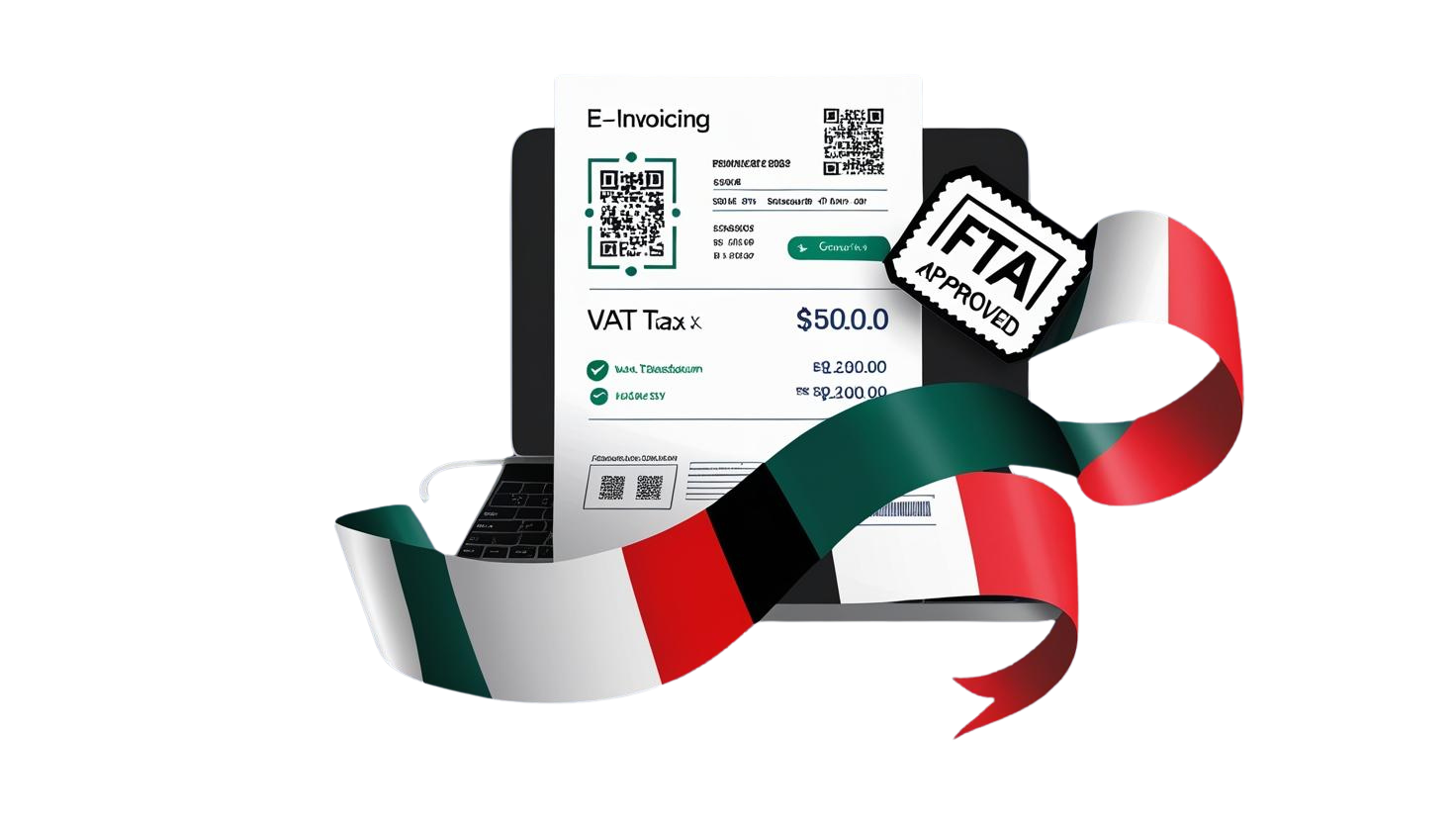
E-Invoicing and E-VAT Filing are digital processes that help businesses in the UAE streamline their tax compliance. E-Invoicing refers to the electronic generation, exchange, and storage of invoices in a structured digital format, replacing traditional paper-based or PDF invoices. It enhances accuracy, reduces manual errors, and prepares businesses for potential future mandates by the Federal Tax Authority (FTA). On the other hand, E-VAT Filing involves the electronic submission of Value Added Tax (VAT) returns through the FTA online portal. Registered businesses must report their taxable transactions, calculate net VAT payable, and submit returns on a quarterly or monthly basis. Together, these processes support efficient, transparent, and compliant financial reporting under the UAE VAT law.
FTA-Compliant Format
Invoices must follow the standards set by the Federal Tax Authority (FTA) in the UAE. A compliant invoice includes required fields such as supplier and buyer details, TRN (Tax Registration Number), item descriptions, VAT breakdown, and invoice totals. Some systems also allow exporting invoices in structured formats like XML or UBL for future digital regulations.

Automated Invoice Generation & Submission
Automated invoice generation means that invoices are created using software systems—like Tally, SAP, Oracle, Odoo, Zoho, QuickBooks based on sales data, without manual data entry. These invoices can then be submitted directly to clients or integrated with tax platforms. This automation saves time, ensures consistency, and eliminates the chances of human error in tax calculations and invoice formatting.
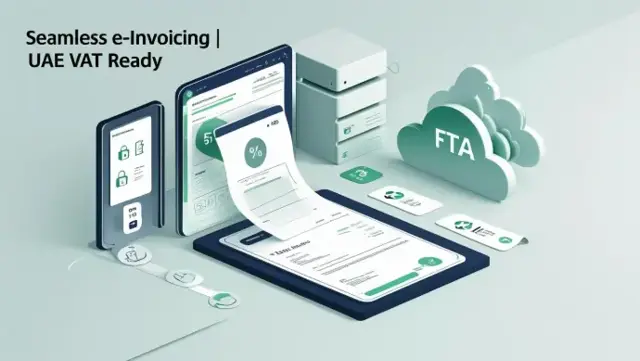
Reduces Manual Errors and Improves Tax Transparency
Since invoice data is automatically generated from sales transactions, there's less risk of mistakes in amounts, tax rates, or item classification. This improves the accuracy of your financial records and enhances transparency in tax reporting—ensuring the FTA can easily verify your declared figures during audits or reviews.
E-Invoicing is the digital creation and exchange of structured tax invoices between suppliers and buyers. It replaces traditional paper or PDF invoices with machine-readable formats like XML or JSON.
Key Features:
- • Automated invoice generation & submission
- • FTA-compliant format
- • Reduces manual errors and improves tax transparency
- • Enables faster audits and digital tracking
UAE Status:
While mandatory e-invoicing is not yet enforced in the UAE (as of now), businesses are encouraged to digitize their invoicing processes in preparation for future mandates and for easier VAT filing.
Benefits for Businesses:
Best Tools for E-Invoicing & VAT Filing



VAT (Value Added Tax) in the UAE was introduced on 1st January 2018 at a standard rate of 5%. Businesses registered under VAT must:
- Charge VAT on taxable goods and services
- Maintain proper records
- File VAT returns and pay due taxes to the Federal Tax Authority (FTA)
✅ Who Must Register for VAT?
Businesses with taxable supplies over AED 375,000/year (mandatory)
AED 187,500/year (voluntary threshold)
A VAT Return (Form VAT201) is a summary of the value of the:
An e-invoice is not just a PDF. It's a machine-readable invoice (usually in XML/UBL format) with the following fields:
Optional: QR Code, UUID, or digital signature (mandatory in KSA, not yet in UAE)